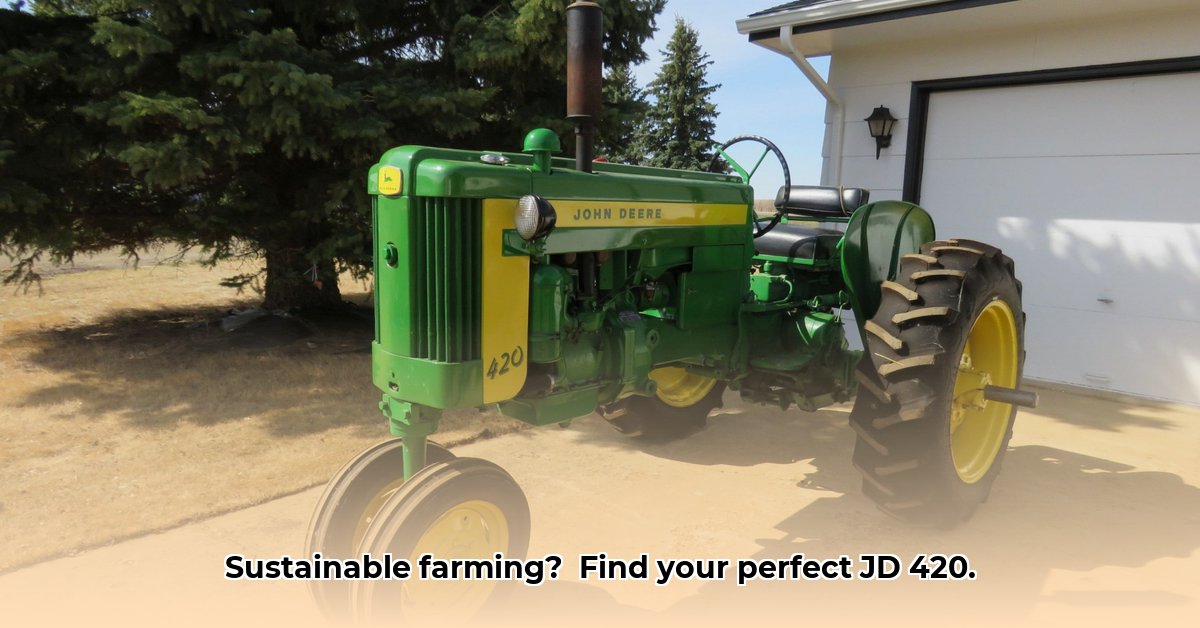
JD 420 Tractor: A Deep Dive into Sustainable Farming Practices
Finding the right tractor is a crucial decision for any farmer, especially those prioritizing sustainable agriculture. The John Deere 420 (JD 420) often emerges as a top contender, but is it the right fit for your operation? This comprehensive guide provides a detailed analysis of the JD 420's features, sustainability performance, and cost-effectiveness within the context of eco-friendly farming. We’ll explore its capabilities, assess its environmental impact, and offer actionable advice to help you make an informed decision. For a comparison, check out information on the John Deere 4700.
JD 420 Tractor Overview: Power and Precision Combined
The JD 420 is a versatile and dependable tractor renowned for its durability and wide range of applications. From plowing and planting to harvesting and transport, this workhorse handles diverse farm tasks efficiently. Its powerful engine, designed for optimal performance even under heavy loads, is a key feature. Moreover, its excellent maneuverability allows for precise field work, maximizing efficiency and minimizing waste. But its capabilities extend beyond raw power; let's delve into its contribution to modern sustainable farming strategies.
Sustainability Analysis: Environmental Impact and Economic Benefits
Sustainable farming isn't merely a trend; it's a necessity. The JD 420's design incorporates several key elements supporting this philosophy. Fuel efficiency is a primary concern for environmentally conscious farmers, and the JD 420 delivers. Its engine is engineered for minimized fuel consumption per acre, translating into substantial cost savings and reduced greenhouse gas emissions. Isn't lower fuel consumption a significant advantage in today's market?
Beyond fuel economy, the JD 420's compatibility with leading-edge precision farming technologies is transformative. GPS guidance and auto-steer systems enable precise planting and spraying, minimizing overlaps and reducing the quantity of fertilizers, herbicides, and pesticides needed. This targeted approach not only saves money but also protects the environment. "Precision farming allows for a significant reduction in resource use, leading to substantial cost savings and reduced environmental impact," says Dr. Emily Carter, Agricultural Engineer at Cornell University.
Reduced or no-till farming is another cornerstone of sustainable agriculture. This method preserves soil health, improves water retention, and minimizes erosion. The JD 420 is well-suited for these practices, further enhancing its eco-friendly appeal. "No-till farming can significantly improve soil health over time, leading to increased yields and reduced reliance on chemical inputs," adds Dr. Michael Brown, Soil Scientist at the USDA.
Cost-Benefit Analysis: Return on Investment (ROI) in Sustainable Farming
While the initial investment in a JD 420 is significant, the long-term cost savings are considerable. Fuel efficiency and reduced input requirements contribute to a high return on investment (ROI). Over time, the savings from decreased fuel and fertilizer usage often exceed the initial purchase price. However, regular maintenance is crucial to prevent costly repairs and ensure the tractor's longevity.
A thorough cost-benefit analysis is essential. Carefully weigh the purchase price, ongoing maintenance, fuel costs, and potential increase in crop yields against the savings from reduced input use. This personalized assessment will determine if the JD 420 is a financially sound investment for your farm.
Comparison with Alternatives: Navigating the Tractor Market
The JD 420 competes with several tractors in its class. While its fuel efficiency and precision farming compatibility are significant advantages, direct comparison with other models based on your specific requirements is crucial. Factors such as horsepower, available implements, and overall features will heavily influence your decision.
Actionable Advice: Making the Right Choice for Your Farm
The decision of whether the JD 420 is the right tractor for you depends on several factors: your farm's size, the types of crops you cultivate, your budget, and your long-term sustainability goals. If fuel efficiency, precision farming capabilities, and environmentally conscious practices are priorities, the JD 420 is a strong contender. However, thorough research and a realistic assessment of your needs are paramount before committing to a purchase.
Actionable Steps:
- Assess your needs: Carefully evaluate your farm's size, crop types, and operating conditions.
- Research competitors: Compare the JD 420's features and specifications with similar tractors.
- Create a budget: Determine your total budget, including acquisition costs, maintenance, and financing.
- Explore financing options: Investigate available financing options to facilitate the purchase.
- Inspect used equipment carefully: If considering a used tractor, ensure a thorough inspection is done to identify potential issues.
Choosing the right equipment is a critical step towards sustainable and profitable farming. By carefully considering the factors outlined in this guide, you can make an informed decision that aligns with your farm's specific needs and long-term goals.